
 Image 1 of 1
-
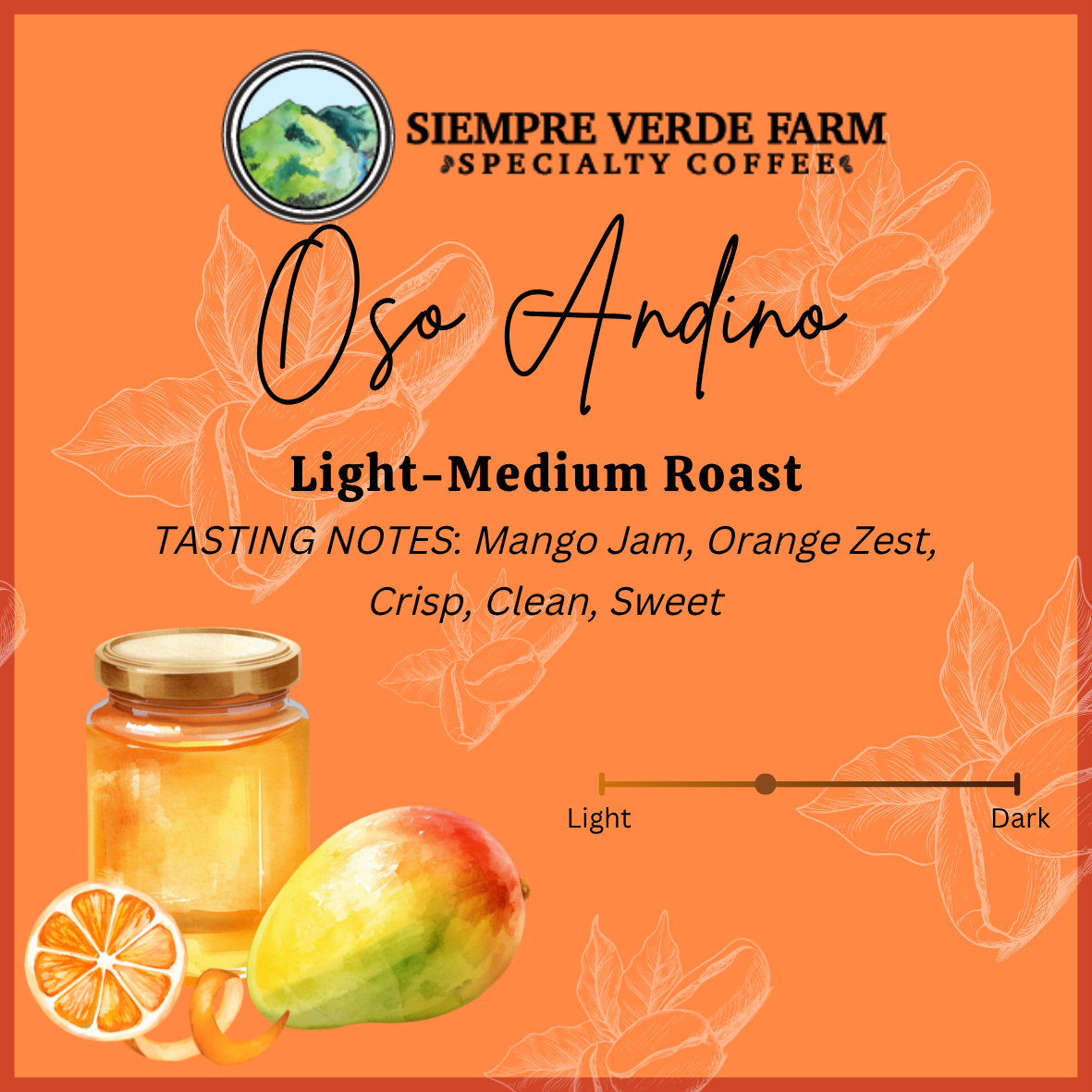
What’s in a name? “Oso Andino” means “Andean bear” in Spanish. The Andean bear, sometimes also known as the spectacled bear, is native to the Andes Mountains—and these bears have made themselves at home on our farm!
Despite the protests of our dogs, we have several of these osos that roam our land—and live quite luxuriously and comfortably! They have a penchant for avocados and other fruits that grow here, and with their sweet tooth and love of fruit in mind, we named this nanolot after them.
Although osos can bring some challenges with them, we actually feel honored to host them. We believe their presence speaks to the way we preserve our land and respect its natural state, and we are glad to share nature's bounty with them. And now that you know the story of our osos, we hope you appreciate the fruitiness of this natural-process coffee as much as the bears would!
How we got here: This coffee started with our traditional hand-picking and hand-sorting approach to harvesting. Next, we initiate a thorough washing process of the cherries that removes impurities and floaters (lower-quality beans). Afterward, the cherries are spread out on drying beds where we continue to remove defects by hand before we begin our fermentation process.The coffee cherries are placed in our fermentation tanks with our mosto (juice from a previous fermentation) until they arrive to the optimal pH level. Then, we remove the cherries from the fermentation tanks and place them on our drying beds to begin the slow but intentional drying phase. This last step is very critical for natural-processed coffees to achieve balance in the cup and prevent undesirable flavors. On our farm, drying a natural coffee can take around 50 days depending on the amount of sun exposure during summer days.
What is natural-processed coffee? It is a method of processing coffee that keeps the cherry intact and does not remove the seed from the rest of the fruit. Through this method, the beans can absorb more of the natural, sugary goodness from the cherries as they dry, resulting in changes of chemical and flavor compounds.
Species: ArabicaVarietals: Typica Mejorado
Process: Natural
Fermentation: Anaerobic
Harvest: 2025
Altitude: 1,500m. / 4,900ft.
Crop area: 2ha. / 5ac.

